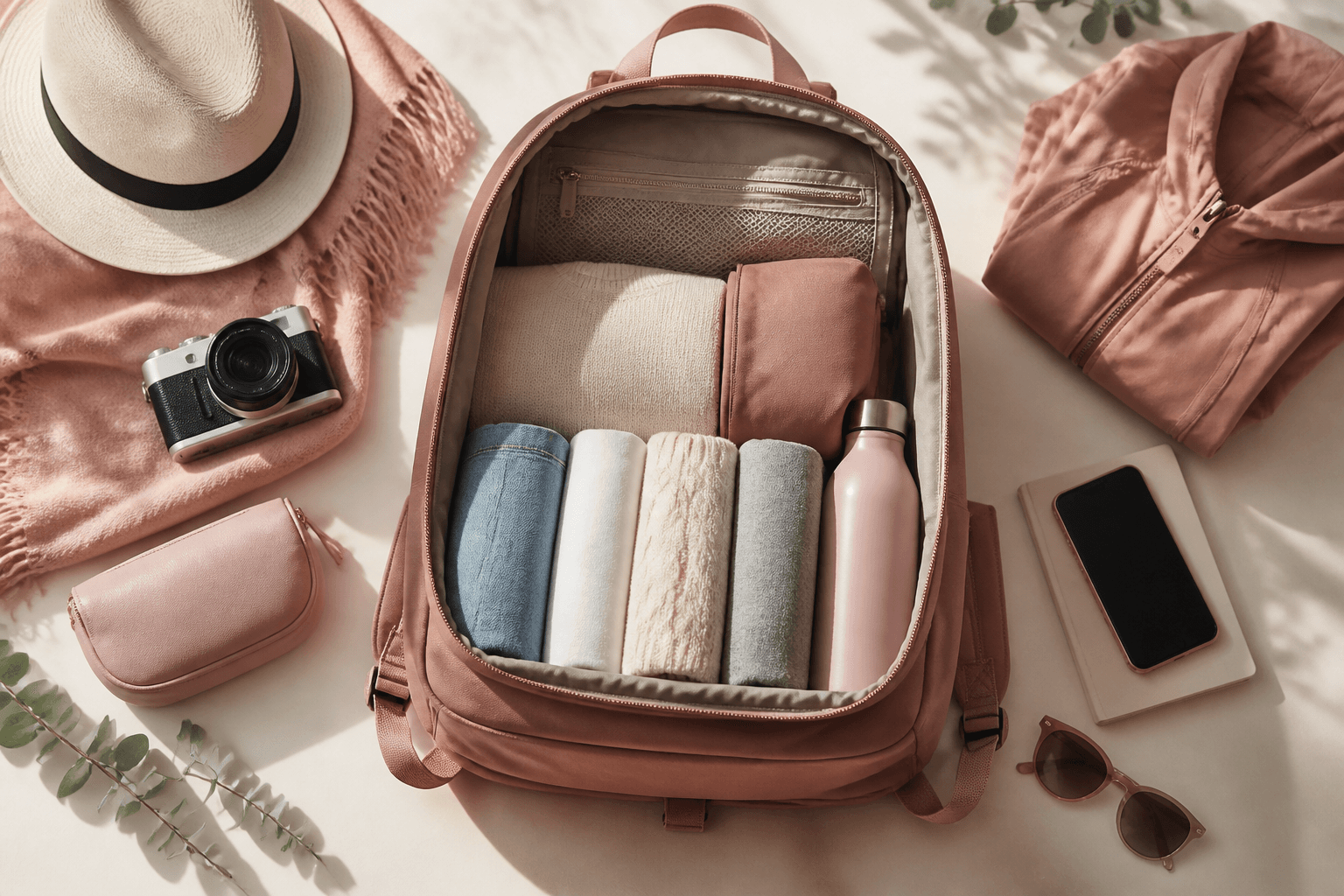
Overpacking is anxiety with zippers. You imagine every weather swing, every restaurant dress code, every “what if,” and your bag becomes a mobile closet you resent carrying.
Light packing for a weekend is a constraints game: weather, work (if any), and comfort. If an item serves none of those, it stays home.
The role-based kit (not a random list)
Assign every item a job before it enters the bag.
Core roles
- Weather shell — rain or wind layer
- Warmth layer — fleece/light sweater
- Two body outfits — mixable tops + one or two bottoms
- Sleep kit — tee + shorts/leggings or designated PJs
- Feet — shoes you wear + one optional spare only if activity demands it
- Power — charger brick / cable / battery if you truly use it
- Health — meds, basic blister care, any daily must-haves
- Documents — ID, tickets, cards (digital backups help)
That is the skeleton. Toiletries get a tiny pouch, not a pharmacy.
The rule of three
Before packing an “extra,” ask: Does this serve weather, work/activity, or comfort? If you cannot name the role in one sentence, leave it.
Worked example: 48 hours in a shoulder bag
Trip: Friday evening train, Saturday hike + dinner, Sunday brunch, home by 4 p.m. Forecast: cool mornings, mild afternoons, 20% rain.
Worn on body: sneakers, jeans, tee, light sweater, packable rain shell in hand or worn.
In bag:
- Second tee + one shirt for dinner
- Underwear ×2, socks ×2
- Sleep tee
- Compact toiletry pouch (toothbrush, deodorant, meds, sunscreen)
- Power bank + cable
- Thin beanie (comfort + weather)
- Reusable bottle (empty through security if flying)
Left behind: second pair of shoes, “just in case” blazer, three chargers, full-size shampoo, workout set never used on past trips.
Bag weight felt irrelevant; decision fatigue dropped because every item had a role.
Outfit formula that prevents outfit panic
Use a simple palette: two neutrals + one accent. Example: navy/gray base + one rust shirt. Everything mixes. You never need a fourth bottom for a two-day trip.
For dinners that feel “nicer,” elevate with the shirt you packed — not a second shoe and jacket “just in case.” If the reservation truly requires dress shoes, wear them on the train and pack the sneakers if hiking is the outlier activity — or reverse that based on which block is longer.
Photograph checklist method
- Pack once the night before a typical weekend trip.
- Photograph the open bag and the worn outfit.
- Next trip, open the photo and pack to match — then adjust only for weather deltas.
Info: Photograph your packed bag once. Reuse the photo as a checklist. It is faster than rewriting lists and catches the forgotten toothbrush better than memory.
Keep a note under the photo: “Add sunscreen in summer / beanie in winter.”
Night-before packing timeline (20 minutes)
| Time | Task |
|---|---|
| 0–5 | Check forecast + activities; write three roles that changed |
| 5–12 | Lay out kit on the bed; remove anything without a role |
| 12–17 | Pack bag; put meds and documents in the same pocket every time |
| 17–20 | Charge devices; place shoes/shell by the door |
Do not pack while half-watching a show and “adding one more thing.” That is how anxiety luggage is born.
Common mistakes and edge cases
Mistake: packing for imaginary versions of you. Future-you who suddenly does hotel yoga at 6 a.m. is a weak reason for a full kit.
Mistake: liquids bloat. Decant or buy mini; hotels often have soap. Your hair will survive 48 hours.
Mistake: “extra shoes fix everything.” Shoes are volume and weight. One pair on feet is the default; justify the second pair with a specific activity.
Edge case: work + leisure weekend. Pack one work top that matches your leisure bottoms. Bring only the laptop gear you will use; leave the “maybe I’ll catch up on email” brick if you know you will not.
Edge case: unpredictable weather. Prefer a packable shell and layering over a third outfit. Layers multiply; outfits add bulk.
Edge case: traveling with kids. Adult bag still follows roles; kids get a separate small pouch for spills. Do not absorb five child contingencies into your personal “just in case” pile without naming them.
Edge case: medical needs. Meds and devices are non-negotiable. Light packing never means underpacking health.
Light-packing checklist
- Forecast checked
- Each item has a named role
- Outfits mix on one palette
- Bulkiest items worn in transit
- Photo checklist updated
- Documents + meds in consistent pocket
- One empty slot left for a souvenir or laundry bag — not pre-filled with junk
How to measure progress
After three weekend trips, score each:
| Metric | Goal |
|---|---|
| Items unused | ≤2 per trip (meds excluded) |
| “I wish I brought X” | ≤1 true miss (not a want) |
| Bag carry comfort | You would carry it another block without resenting it |
| Pack time | ≤25 minutes night-before |
If you repeatedly unused the same category (extra shoes, extra hoodie), ban that category for the next two trips. Light packing is a feedback loop, not a personality type.
Wear the bulkiest pieces, pack for roles, and let the photo be your memory. Weekend trips get freer when your bag stops arguing with you.